Introduction
So, you need services from one of the top penetration testing companies in the UK? In 2026, choosing the right partner is more crucial than ever. With cyber threats evolving rapidly, you need a team that doesn’t just tick a compliance box but genuinely secures your digital assets.
This comprehensive guide explores the best pen testing companies the UK has to offer, ensuring your cyber security needs are expertly met. We delve into what penetration testing involves and the critical types of testing, and we provide a carefully curated list of top providers to help you decide which vendors to contact.
We have also produced a Penetration Testing Buyer’s Guide, which builds on this blog and provides vital details on the elements considered when scoping a penetration test.
So, what exactly is Penetration Testing?
Penetration testing, or pen testing, is a crucial process in identifying and strengthening vulnerabilities in a system. It involves simulating cyberattacks in a controlled environment to evaluate a system’s security. This section will explore various security testing services, including offerings you will likely see when researching penetration testing companies. Some companies may specialise in specific areas, while others may not offer the services listed below. It’s essential to examine the pen testing company before agreeing to purchase its penetration testing services.
- Web Application Penetration Testing: Tests web applications for vulnerabilities, including SQL Injection, Cross-Site Scripting (XSS), and other common web-based attacks, an essential aspect of website security.
- API Penetration Testing: Evaluates the security of Application Programming Interfaces (APIs) to prevent API Key Leakage and IDOR vulnerabilities.
- Network Penetration Testing: Safeguards your internal and external network infrastructure against threats like Man-in-the-Middle attacks.
- Cloud Penetration Testing: Assesses cloud environments (AWS, Azure, GCP) for misconfigurations and unsecured storage.
- GDPR Penetration Testing: Ensures compliance with GDPR, protecting data privacy and integrity.
- Mobile Application Penetration Testing: Secures iOS and Android apps against mobile-specific threats.
There is also Social Engineering Penetration Testing…however, we probably don’t need to discuss what happens during those engagements.

Penetration Testing Companies in the UK (2026 Reviews)
We’ve done the hard work for you. This section highlights some of the leading penetration testing providers across the UK. From established industry names to innovative emerging firms, each company on our list offers a strong mix of professionalism, technical expertise, and tailored support.
| Company | CREST Accredited | Best For | Key Services |
|---|---|---|---|
| 1. Sencode | Yes | SME to Enterprise & Agile Testing | Pen Testing, Web, API, Cloud, Red Teaming |
| 2. Aptive | No | SME to Enterprise | Vulnerability Assessments, Mobile |
| 3. Sentrium | Yes | SME to Enterprise | Pen Testing, Code Review |
| 4. Nettitude | Yes | Financial Services & STAR | Red Teaming, SOC, Compliance |
| 5. Cyber Tec Security | Yes (Through partner company) | Cyber Essentials Certification | Cyber Essentials, SME Support |
Sencode
Overview: As the authors of this guide, we genuinely believe in the quality of our service. Sencode is a leading UK-based penetration testing company that delivers clear, actionable, and technically rigorous assessments. We specialise in CREST-accredited pen testing services, Cloud Configuration reviews, and bespoke Red Team Assessments. If there is a vulnerability, we will find it.
CREST Accredited Penetration Testing – Yes
Services Offered:
- Penetration Testing (API, Web, Cloud, GDPR, Mobile, Network)
- Cyber Security Assessments (Cloud Config reviews, OSINT Assessments, Red Team Assessments)
- Cyber Awareness Training
- Breaches Database
- Academy (Cyber Awareness Training Platform)
You can always contact us using the form below to find out.
Contact us
Get a free, no obligation quote from one of our expert staff.
Aptive
Overview: Based in Surrey Research Park, Guildford, Aptive offers affordable mobile and web application security testing services. Their consultants are CREST registered, so you know they are reliable. They also provide free retesting within 30 days of a penetration test and have fixed-price proposals. (Sencode offers retesting within 3 months).
CREST Accredited Penetration Testing – No
Services Offered:
- Vulnerability Assessment Services: Both manual and automated vulnerability assessments
- Penetration Testing
- Security Hardening
- Network Security Audits
Sentrium
Overview: Sentrium is a Cheltenham-based consultancy. They are CREST-approved and have a strong reputation for source code analysis as well as standard penetration testing.
CREST Accredited Penetration Testing – Yes
Services Offered:
- Penetration testing
- Offers a comprehensive source code analysis review
- Cyber security advisory services
Nettitude

Overview: Nettitude is a global provider of cyber security services. Its offerings focus on technical assurance, consulting, managed detection, and response. Nettitude’s team comprises CREST-certified penetration testers with extensive experience in security and software development.
CREST Accredited Penetration Testing – Yes
Services Offered:
- Security Testing
- Penetration Testing
- Risk and Compliance
- SOC-as-a-Service
- Cyber security consulting services
Cyber Tec Security

Overview: Founded in 2018, Cyber Tec Security is a Jersey-based IASME Certification Body focused on improving the security health of businesses across the UK, especially SMEs. Cyber Tec Security has over 30 years of industry experience and aims to help businesses obtain their Cyber Essentials certification.
CREST Accredited Penetration Testing – Yes (Through a partner company)
Services Offered:
- Cyber Essentials Basic & Plus Certification: Offers a best price guarantee on certification packages and values authenticity over automation, providing personalised service with security specialists
- Penetration Testing (Delivered through partners)
- Vulnerability Assessment
- Cyber Insurance: Includes a 24/7 incident support response line in the case of a breach occurring
Why does choosing the right penetration testing company matter?
Choosing the right penetration testing provider isn’t just about compliance requirements – it’s about getting a realistic view of your risk and strengthening the controls that protect your systems, data, and customers. The right partner will identify issues that matter, explain impact clearly, and provide practical remediation guidance your teams can act on.
Consider a mid-sized software company preparing for a major client onboarding. To meet a contractual requirement, they commission a low-cost penetration test with a very limited scope. The assessment produces a short report with mostly low-risk findings and no evidence of deeper testing.
A few months later, a customer reports suspicious activity linked to their platform. An investigation reveals that a critical access control flaw had gone unnoticed during the earlier assessment. The issue allowed unauthorised access to sensitive client data.
The result was an emergency incident response, contractual penalties, and significant reputational damage. The company ultimately had to commission a full retest from a more experienced provider, costing more time and money than doing it properly in the first place.
This is why choosing the right penetration testing partner matters. A thorough, well-scoped assessment provides meaningful insight into real-world risk, not just a report to satisfy a checkbox.
Top things to look for in a Pen Testing Company UK

When selecting a penetration testing company, it’s crucial to consider various factors to ensure you receive comprehensive and effective cyber security services. Here are the top elements to consider when choosing among the leading pentest companies UK offers:
Why You Should Choose a CREST-Accredited Penetration Testing Provider
When selecting a penetration testing company, not all providers are created equal. So, how do you ensure you’re working with a provider that meets the highest industry standards?
✅ Choose a CREST-accredited penetration testing company.
A CREST accreditation means that the company has been independently assessed for technical competence, ethical conduct, and professional service delivery. CREST-Accreditation ensures that:
- Consultants are likely to be highly trained & certified (e.g. CRT, CCT INF, CCT APP, OSCP)
- Testing methodologies follow best practices (PTES, OWASP, NIST)
- Reports meet industry compliance and security standards
- The company’s information security and quality standard policies align with ISO 27001 and ISO 9001, respectively.
- Legal and ethical hacking principles are upheld
If you want more information on CREST. We wrote a great guide which explains everything you need to know. You can find that guide here.
What could happen if you don’t choose an accredited provider?
Unfortunately, some unaccredited penetration testing companies cut corners:
- Inexperienced testers may miss critical vulnerabilities
- Reports can lack depth, making remediation harder
- Findings may not align with compliance requirements
- Third parties may not accept a penetration test report that an unaccredited company delivered
- Poor scoping can lead to incomplete or irrelevant tests
Before signing any contract, ask:
- Is the company CREST-accredited?
- Can they provide an example report?
- Do they offer tailored testing based on risk?
Expertise and Qualifications of the Consultants
Look for a pen testing company with a team of certified professionals with credentials such as CREST [CRT, CCT INF, CCT APP], OSCP, or CISSP. These certifications indicate high expertise and a commitment to cyber security. Not all penetration testing companies will have the same level of knowledge, so it’s essential to understand this from the outset.
It’s essential to consider not only the company itself but also the consultants who will conduct the assessment. If the company is CREST-accredited, that does not guarantee the consultant will be. Consider being more granular in your requests and ensuring that a qualified consultant conducts the assessment. The quality of the assessment primarily depends on the consultant’s quality. As the service buyer, it’s essential to ask the right questions and ensure you receive top-quality service.
Get an example report from the pen testing company
Ask for an example of their penetration test report. Why? Because the report is where the actual value of a pen test lies. That’s what you pay for; that is usually the final deliverable for most penetration test services. A good report doesn’t just highlight the issues – it explains them clearly, shows the potential risks, and provides practical steps to fix them. The final deliverable is unknown if the penetration testing company can’t give you an example report. The provider should be able to help you understand what to expect from their service.
Here’s what to look for when looking for a pen testing provider:
- Overviews: Is the overview adequately described? Are the test results appropriately summarised for a non-technical audience?
- Clarity: Does it make sense to someone who isn’t super technical?
- Depth: Is it detailed enough to be helpful, or just surface-level findings?
- Remediation Quality: Does it include recommendations your team can implement? Are the recommendations customised to the tested environment?
- Junk: Does it include many low-hanging fruit findings that are poorly explained?
- Impact: Are the findings adequately explained and catered to the environment?
Customised testing approaches of the company
Choose a penetration testing company that offers tailored penetration testing services. Every organisation has unique security needs, and a one-size-fits-all approach will not be practical. The provider should be able to customise its testing methods based on your specific infrastructure and security concerns.
Scoping quality and thoroughness
The pen testing company should adequately scope every assessment. Scoping should be thorough and complete, considering all assets within the scope and the numerous variables that come into play when evaluating. A company that has not had a penetration test before might not know what to look out for; however, here is some insight. The pen testing company should ask several questions about each test type required for the testing:
- How vast are the assets?
- Is the pen testing company reviewing a single web application? Or an entire corporate environment. The more assets under review, the more costs associated with the assessment.
- How many user roles are within the scope?
- Is the test being conducted for compliance reasons? (Such as PCI DSS, ISO 27001, DTAC)
- Will the test be conducted from a black, grey or white box perspective?
- The test perspective can affect the price, depending on the vendor. If the penetration testing company does not know the environment under review, it must enumerate and footprint the assets in that environment. This can increase the project’s overall costs due to the time required to undertake this task.
- Is the test to be conducted from an authenticated perspective or an unauthenticated one?
- What environment is to be tested? (Production, QA, Development)
- How sensitive are the lead times?
- Do you need the testing in two weeks? While a vendor might be a great fit, they may be fully booked for a few weeks or even months. It is always best to check with the vendor to ensure that their lead times align with your requirements.
- Is retesting part of the scope? Is the retesting free, or is this a charged service?
- If you have received a project proposal from a penetration testing company, look out for specific references to retesting. If the proposal does not mention it, you will likely be charged for the luxury later. If in doubt, ask!
If these questions are not asked at the scoping stage, the project’s total price may not accurately reflect the environment. Speaking to a Senior Penetration Tester when scoping an environment is always best. A senior will be able to parse out the finer details and ask the essential questions; experience will often save time and money when scoping the assessment.
Communication with the company
A good penetration testing company should keep the client updated throughout the assessment, providing updates on when testing is being conducted and on any hiccups that will almost certainly occur. Good communication should include daily updates and quick triage of high- and critical-risk vulnerabilities, especially in production environments. Bad communication during the penetration test often leads to a poorer assessment outcome. The testing team must maintain communication with the client via email, a custom Slack channel, or any other agreed-upon means. The project lead for both sides must agree on a communication strategy.
A good provider should ensure the following:
- The company should ensure that the test is properly planned and that the tester has all the information needed to conduct the assessment.
- Before the test starts, there should be enough time to iron out any access issues or concerns.
- The consultant should inform the client when the testing starts and finishes.
- The consultant should use their best judgment when triaging vulnerabilities with the client. If the consultant considers an issue high-risk and easily exploitable, the consultant should triage the vulnerability with the client.
- The consultant should ask questions during the assessment if they are unsure about something, such as an unclear web application function.
- The consultant should inform the client if they suspect something has gone wrong, such as an asset suddenly going offline or a web application function that appears to have broken during testing.
- The company should inform the client if it suspects the assessment has been under- or over-scoped. Scoping a penetration test is not an exact science, and sometimes the scoping may not be 100% accurate.
Comprehensive reporting and support
A quality penetration testing company should provide detailed reports that identify vulnerabilities and offer clear, actionable recommendations for remediation. Look for any added value to the company’s reports, such as Indicators of compromise. Additionally, check if they offer post-testing support to help address any security issues and improve defences. Some penetration testing companies (including us) offer free retesting after the assessment, although this is uncommon in the industry.
Reputation and experience
Research the company’s reputation in the market. Look for reviews, case studies, or testimonials from previous clients. Experience in handling a variety of security scenarios and a track record of successful engagements are good indicators of a reliable company. Speak to a security professional handling the assessment before signing any project proposal. Ask for an example penetration test report if required. Most companies can provide a sample report that closely reflects the reporting standards; after all, this is the final deliverable for most penetration testing services.
Ethical and Legal Compliance
Ensure that the provider adheres to ethical hacking guidelines and complies with all relevant legal and regulatory standards. This includes complying with data privacy laws and having appropriate contracts and non-disclosure agreements in place to protect your sensitive information.
How much does penetration testing cost?
It is essential to factor in the costs when assessing a penetration testing company. Prices vary based on scope and complexity, but day rates for a qualified senior consultant typically range from £900 to £1,700.
Premium options (>£1,500/day): Specialist Red Teaming or highly complex infrastructure.
Cheap options (<£700/day): Often automated scans dressed up as pen tests.
We wrote a fantastic guide you will almost certainly want to read.
Conventional Penetration Testing vs Objective-Focused Penetration Testing
Before reaching out to a penetration testing company, it is worth clarifying what outcome you want from the service. Typically, penetration tests are either conventional (Offered by the vast majority of penetration testing companies) or goal-oriented. Some pen testing companies may have limited expertise in goal-oriented testing, so it’s worth asking whether they can offer goal-focused testing before investing time and resources in scoping the environment.
Conventional Penetration Testing Explained
Conventional penetration testing focuses on uncovering numerous security weaknesses within a specified environment, offering a comprehensive view of the system’s ability to withstand different cyber threats. While it might not explore every issue the consultant identifies in detail, this extensive method can effectively highlight vulnerabilities across digital assets. This form of testing makes up the clear majority of penetration tests conducted.
Because the scope is designed to be comprehensive, conventional tests must balance depth with the overall breadth of coverage. Organisations often schedule these evaluations regularly (for instance, once or twice a year) to maintain an updated understanding of their security posture.
Consider a retail company with multiple branches and an e-commerce web application to illustrate a conventional penetration test. The penetration testing company is tasked with assessing all of the company’s digital assets, including networks (Internal, External, and Wi-Fi), web applications, and APIs. The testing aims to identify as many potential weaknesses as possible, including outdated software, insecure input validation, and cryptographic practices. While a conventional penetration test casts a wide net, not every issue will receive an in-depth review; however, catching a large volume of issues means the company can address and prioritise them.
Objective-Focused Penetration Testing Explained
Objective-focused penetration testing, also known as goal-based or targeted testing, stands out by focusing on a specific objective, like retrieving sensitive information or breaching a business-critical service. Instead of trying to uncover every potential vulnerability, the tester’s work is directed towards a particular mission, simulating a real-world threat situation.
More narrowly defined, aiming at a particular system, dataset, or pathway within the target environment. This style of testing can be quicker than a broad assessment, since efforts are channelled towards a singular, high-priority goal.
To illustrate goal-based testing, consider a financial services provider that wants to determine whether its payment processing system is vulnerable to attacks. While the company could conduct a conventional penetration test, it would prefer an objective test. The penetration testers then deploy a variety of attacks, such as social engineering and phishing, web application exploits, and network infrastructure attacks, to try to compromise the system.
Because the penetration test was goal-oriented on a narrow objective, the client gains vital insights regarding how an attacker might compromise their payment data.
Penetration Testing for Compliance: UK Requirements
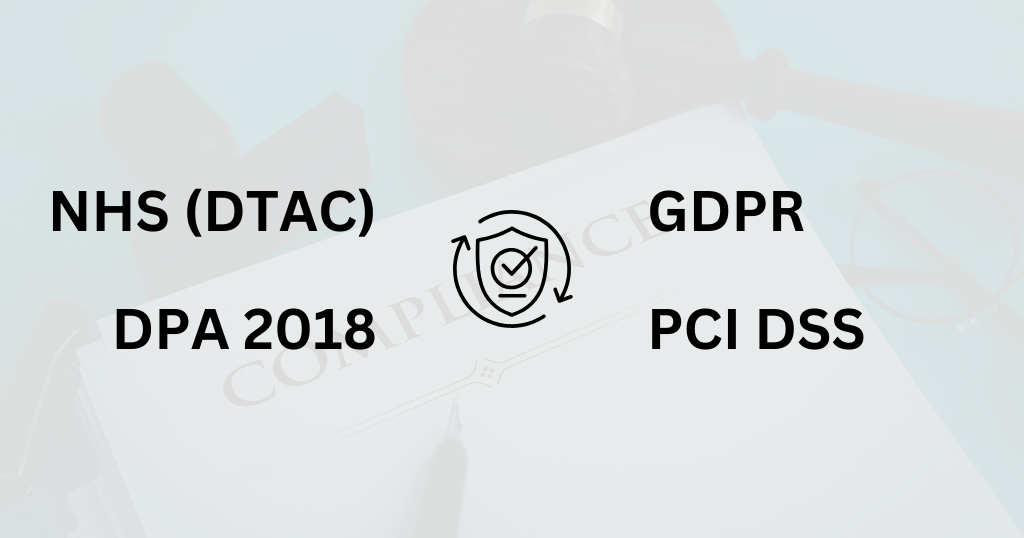
For companies operating in the UK, it’s essential to be aware of the various compliance requirements and regulations related to cyber security. Understanding this is essential to avoid potential fines and reputational damage. Below is a rundown of key regulations and compliance standards that may apply to your organisation, especially when considering penetration testing.
Data Protection Act 2018 (DPA 2018)
The DPA 2018 is the UK’s implementation of the General Data Protection Regulation (GDPR).
Why it matters to your company: If you process personal data, you must protect it against unauthorised access and minimise the risk of data breaches. Penetration testing can help identify vulnerabilities in your systems that could lead to data breaches and ensure compliance with the DPA 2018.
General Data Protection Regulation (GDPR)
Although the UK has left the EU, GDPR principles remain part of UK law. GDPR sets out stringent data protection and privacy rules for EU and UK individuals.
Why it matters to your company: Non-compliance with GDPR can result in significant fines for your company. Regular penetration testing helps ensure sufficient data protection measures, reducing the risk of breaches and demonstrating compliance.
Digital Technology Assessment Criteria (DTAC)
DTAC is a framework used by the National Health Service (NHS) to assess the cyber security of digital health technologies.
Why it matters to your company: If you provide digital services or technologies to the NHS, you must meet DTAC standards. Penetration testing helps ensure your products are secure and compliant. For more information on DTAC, please read our blog.
Payment Card Industry Data Security Standard (PCI DSS)
PCI DSS sets security standards for companies that accept, process, store, or transmit credit card information.
Why it matters to your company: PCI DSS compliance is mandatory if your company handles payment card data. Penetration testing is required to identify and fix vulnerabilities in systems that handle cardholder data.
While there are more compliance regulations, the topic’s depth is not the focus of this blog post.
Conclusion
This guide has outlined the key considerations when selecting a penetration testing company in the UK, from understanding different service types to evaluating accreditations, reporting quality, and scoping practices. Choosing the right provider is not simply a compliance decision; it directly affects your organisation’s ability to identify and remediate real-world risk.
A well-executed penetration test provides clear insight into exploitable weaknesses, practical remediation guidance, and the confidence that your security controls are working as intended. By selecting a qualified, reputable provider, you can move beyond checkbox compliance and take a more proactive approach to protecting your systems, data, and customers.
Take the time to evaluate providers carefully and choose a company that aligns with your technical, regulatory, and business requirements. Remember, the right pen testing companies are not just service providers but your allies in the ongoing battle against cyber threats.
Want to start a conversation about securing your assets? Contact us today for a free, no-obligation quote, and let’s talk cyber security. Remember, your digital security is our mission, and we’re here to help you navigate these complex waters with confidence and expertise.
This is a common question when looking for penetration testing services. The duration of a penetration test can often vary widely. The volume of the assets and complexity of the systems are usually the most significant factors in the length of the assessment. Generally, a pen test can take several days to several weeks. Other factors may also dictate the size of an evaluation, such as the requirements for on-site or off-site testing. Given the complexities of scoping, working closely with a penetration testing provider to scope the assessment professionally is essential.
The primary goal of any penetration test is to identify vulnerabilities in a digital asset before an attacker can exploit them. A penetration test involves a simulated cyber attack against the system under controlled conditions. This approach helps organisations better understand their security posture and improve their security. Some organisations also require penetration testing to adhere to specific standards and regulations.
When assessing the frequency of penetration testing, many factors should be considered. Common factors could include changes to the infrastructure or codebase, compliance requirements, or a previous security breach that requires a thorough investigation. As a rule of thumb, penetration testing should be conducted annually. However, high-value organisations should update their frequency requirements based on the direct risk to the organisation. It is not uncommon for organisations with high-value intellectual property to be frequent targets of sophisticated attackers.
If something breaks during a penetration test, it’s crucial to have clear, proactive communication between the tester and your organisation to minimise disruption and risk; the consultant should immediately inform you of any suspected issue, such as an application function failing or an asset going offline, so that both parties can triage the problem, agree on next steps, and quickly restore normal operations, ensuring that even in unexpected situations your security assessments remain both rigorous and safe.
Yes. If you’re considering partnering with a company and have concerns about its security posture, it’s entirely appropriate to request that it undergo penetration testing. This is especially common for organisations dealing with sensitive information, highly regulated industries, or where supply-chain security is critical. Many companies proactively conduct penetration tests to reassure partners, clients, or stakeholders of their commitment to information security.
Penetration testing reports typically include a summary of findings, a detailed breakdown of vulnerabilities discovered, the severity of each issue, evidence of exploitability, and actionable remediation advice tailored to the tested environment. If in doubt, ask the company for an example report.