












What is API Penetration Testing?
API Penetration Testing is a specialised form of security assessment that identifies vulnerabilities and security risks in application programming interfaces (APIs).
APIs are the backbone of modern applications, so their security is paramount. APIs often expose sensitive data and application logic, making them a lucrative target for attackers. API Pen Testing is essential for safeguarding the API and the applications and data it interacts with.
Common API Security Vulnerabilities
What does choosing a CREST provider mean?
CREST accreditation is an independent, rigorous assessment of technical competence, process and data security. Choosing a CREST-accredited provider means your testing is delivered to a standard you can trust – and evidence you can stand behind.
Certified Penetration Testing Consultants
Our consultants are highly trained and individually certified.
Proven Pen Test Methodologies
Our pen testing follows recognised best practices: PTES, OWASP, and NIST.
Compliant reporting
Our reports provide executive context, technical evidence, risk-rated findings and practical remediation guidance.
ISO aligned
Our information security and quality policies align with ISO 27001 and ISO 9001.
Grey, Black and White Box Penetration Testing
At Sencode, we test from every perspective. Not sure which fits your needs? Speak to a member of our team; our experts are on hand to advise.
What does API Pen Testing include?

What are the benefits of API Penetration Testing?
The widespread use of APIs has made them a prime target for attackers. API Penetration Testing offers numerous benefits that aim to enhance the security and reliability of applications. Key advantages include
The benefits of API Penetration Testing are clear; our blog post provides more details on API Security Testing vulnerabilities (with examples and mitigation strategies).
API Penetration Testing Methodology
In this initial phase, we define the scope and objectives of the penetration testing project. We identify the API endpoints to be tested, understand the business logic and functionalities of the API, and set clear goals and expectations. Proper scoping ensures that we focus our testing efforts and align them with the organisation’s security requirements.
During this phase, we gather as much information as possible about the API. We understand the API architecture and underlying technologies, collecting data from the API documentation and through manual exploration. Our primary goal is to create a detailed map of the API’s attack surface.
In this phase, we use automated tools to scan the API for known vulnerabilities. We identify issues with data validation practices using automation tools and employ manual techniques to find problems with authentication, authorisation, or session management. The scan results provide a preliminary list of potential security weaknesses that require further manual validation.
During threat modelling, we analyse the API from an attacker’s perspective. We examine various scenarios and identify how an attacker might exploit the API. This helps us prioritise the vulnerabilities based on their potential impact and likelihood of exploitation.
In this phase, we manually exploit the identified vulnerabilities. We bypass security measures for authentication, exploit weak authorisation controls, check for SQL injection, and use other attack methods. Our objective is to understand how the vulnerabilities affect real-world situations and compile proof of successful exploitation.
In the final phase, we compile a detailed report of the findings. The report describes the vulnerabilities, provides evidence of exploitation, and assesses their severity and impact. Additionally, we include recommendations for remediation and improvement. We then plan a retest to ensure we have resolved the issues.

Penetration test reports, delivered securely.
Clear reporting turns technical findings into practical action. Every engagement includes evidence, prioritised remediation guidance and content that both technical teams and decision-makers can understand.
Contact a consulting team member by phone, email, or pigeon post. We will then discuss whether we can help you and arrange a scoping meeting to discuss your requirements.
In the scoping meeting, our team will discuss your requirements in further detail. Our team will ask questions in regards to the following:
Our expert consultants will discuss and finalise which digital assets you need testing in the scoping meeting. Based on the requirements, we will then assemble a project proposal and quote and agree on a schedule for conducting the security assessment. Our proposal document will include the following information:
The Penetration Testing starts. A member of our Penetration Testing team will liaise with a member of your company throughout the entire testing process. You will be the first to know if we have any questions or concerns. Our testing team will be on hand throughout the penetration test lifecycle to answer any questions or concerns. Our tester will:
A Penetration Test is useless without a well-written report. Our reports are written in plain English, concise, and thoroughly documented. The Penetration Test Report is typically furnished within 5 days after the testing phase is complete. If you are interested in seeing an example report, please contact our team.
Each report details the following:
At Sencode, we offer free retesting for every Penetration Test we conduct. You fix the issues; then we will verify they can no longer be exploited by an attacker. Our team will arrange a mutually suitable time to conduct the retest, after the remediation efforts have taken place. Our tester will follow these steps:
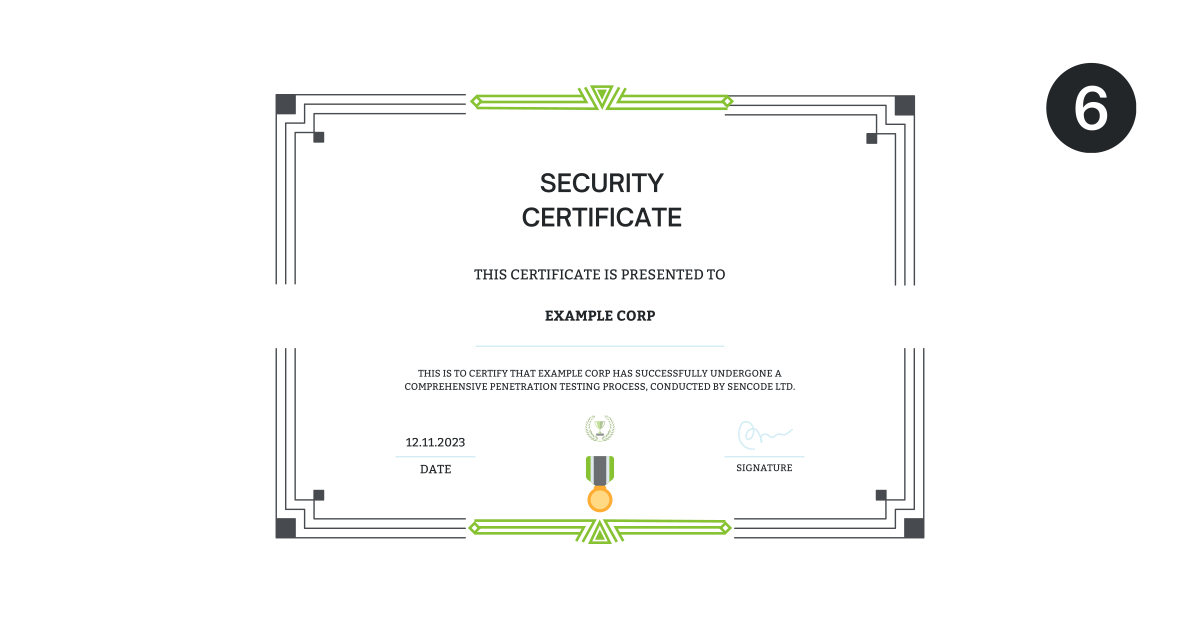
Our clients receive a testing certificate that can be shared with partners and customers, showing that their company takes security seriously. The certificate and document are designed to be easily digested by third-party suppliers, the document removes the technical details and can be safely distributed.
The Security Testing Certificate is available on request, after the retest has been complete. The security certificate shows:
Get in touch for a consultation.
Contact a consulting team member by phone, email, or pigeon post. We will then discuss whether we can help you and arrange a scoping meeting to discuss your requirements.
In the scoping meeting, our team will discuss your requirements in further detail. Our team will ask questions in regards to the following:
Client Testimonials
Don’t just trust our word for it; hear what our clients have to say about working with our team.
“The team at Sencode are flexible and easy to work with while also being extremely diligent and professional in what they do. As a result, we regard Sencode as a critical partner in ensuring our software is properly tested.”
Chief Technical Officer
Huler
“We held a briefing meeting with Callum to demo the system, answer relevant questions, and provide access for testing. Once the testing was completed, the report was efficient and comprehensive.”
Project Manager
Trinity College Dublin
“The team was super friendly, knowledgeable, and happy to chat with us. They did really great work, and I’m very happy that we got to work with them.”
IT Director
Diversity and Ability
“All conversations with Sencode have been very easy, and it’s clear that the team know their stuff. From the initial chat to the retesting process, we’ve been kept informed and supported throughout.”
Digital Lead
Verve Group
“Sencode have conducted our penetration testing for the last two years. Each time, they were professional, polite and kept us informed throughout the process. The reports were received in a timely manner and were concisely written. All this and at a competitive rate.”
Technical Engineer
Pip Studios
“Working with Sencode has been brilliant. You can tell they genuinely love what they do – it shows in how thoroughly they test everything and dig into the details. Even a non-tech person could understand what they found and what needed fixing.”
Cyber Security Specialist
Home Group
Frequently Asked Questions: API Penetration Testing
API Security Testing is indispensable for a multitude of reasons. Primarily, it plays a vital role in data protection. APIs often serve as the conduits for sensitive information, making them prime targets for cyber-attacks. This form of testing is also essential for compliance with regulatory frameworks such as GDPR, which mandate stringent data protection measures.
Over the years, there have been a number of high-profile instances of APIs being misused by attackers. Some result from a simple lack of rate-limiting. Many instances involve broader security vulnerabilities that businesses could have prevented, provided they had identified them.
Furthermore, API Security Testing is crucial for ensuring business continuity. A compromised API can lead to operational disruptions, financial losses, and reputational damage. Lastly, it is necessary to secure third-party integrations, as APIs frequently interact with external services. This interaction necessitates robust security measures to mitigate potential vulnerabilities and ensure a secure data exchange environment.
REST and SOAP APIs embody distinct security paradigms. REST APIs often utilise standard HTTP authentication methods but may encounter issues like broken authentication and Excessive Data Exposure, as highlighted by OWASP API Security. Conversely, SOAP APIs have standardised security protocols like WS-Security for authentication, authorisation, and message integrity.
While REST APIs offer flexibility and ease of integration, they may present more security challenges, making REST API security and API penetration testing crucial. Conversely, with their strict standards and protocols, SOAP APIs can provide a more secure but less flexible environment, necessitating different approaches to API security testing. The choice between REST and SOAP may hinge on the project’s specific security requirements, and understanding the nuances of OWASP API Security guidelines can provide invaluable insights for bolstering API security.
APIs come in various forms, each suited to different needs and use cases:
SOAP (Simple Object Access Protocol): A protocol for exchanging structured information in web services using XML. While still used in modern web applications, SOAP has steadily declined recently. At the same time, developers opt for more modern APIs, such as REST and GraphQL
REST (Representational State Transfer): is an architectural style that uses standard HTTP methods. It is lightweight and easy to implement. The vast majority of APIs built today use the REST architecture.
GraphQL: A query language for APIs that allows clients to request only the data they need, making it more efficient and flexible. GraphQL was originally built in-house by Facebook (In 2012), but it was released in 2015 under open-source licensing. Since its release, developers have widely adopted the technology.
A REST API is an architectural style for designing networked applications. It relies on a stateless, client-server, cacheable communications protocol, usually HTTP. REST APIs allow applications to interact with web services using standard HTTP methods like GET, POST, PUT, PATCH, and DELETE. REST APIs are known for their simplicity and scalability, making them popular for many web services and applications.
A SOAP API uses the Simple Object Access Protocol to allow communication between applications over the internet. It relies on XML-based messaging for request and response transactions and typically operates over HTTP or SMTP. SOAP APIs are known for their robustness and security features, making them suitable for enterprise-level services that require high reliability and security.
A GraphQL API provides a query language for an API, allowing clients to request the data they need. Unlike REST, which exposes multiple endpoints for different resources, a GraphQL API typically has a single endpoint (Usually /graphql) that can serve various queries and mutations. This flexibility reduces the amount of data transferred over the network. It provides a more efficient and powerful way to interact with the API and its data.
Common tools used for API pen testing include:
Postman: For testing API endpoints and automating tests.
Burp Suite: A comprehensive tool for web application security testing. Burp has extensive capabilities for API Security Testing.
OWASP ZAP: An open-source tool for finding vulnerabilities in web applications.
SoapUI: Specifically designed for testing SOAP and REST APIs.
In most cases, APIs should be tested at least once a year or after significant changes or updates. Regular API Security Testing helps maintain a strong security posture and protect APIs against evolving cyber threats. If in doubt about what constitutes a significant change, consult security experts.
Read the latest from our Cyber Security Blog


Explore Our Downloadable Resources
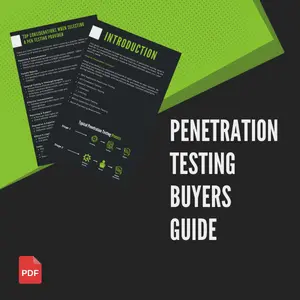
Penetration Testing Buyer’s Guide
Our Penetration Testing Buyer’s Guide 2025 outlines penetration testing fundamentals, service types, cost factors, testing approaches, and compliance considerations. Download a copy of our guide.
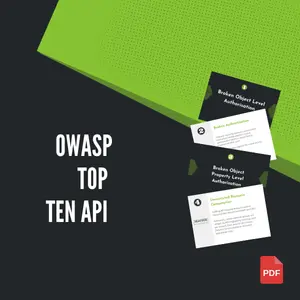
OWASP API Top 10 Flash Cards
The OWASP API Top 10 Flash Cards highlight critical security threats affecting modern APIs, including authorisation flaws, misconfigurations, and unsafe integrations and many more. Download a copy of the cards.